Contract grade furniture is furniture designed, tested and warrantied for commercial use in offices, healthcare, education and public spaces, bought through a dealer for a specific project. It is tested to ANSI/BIFMA standards, made to order in the finishes you specify, and backed by multi-year warranties for all-day use.
What is contract grade furniture?
Contract grade describes furniture built for the heavy use of commercial spaces rather than the home, and it is made to withstand a large number of people using it every day. The name comes from how it is bought: through a contract between an organization, a dealer and the manufacturer, usually for a whole project.
It is made from durable materials such as steel, wood and metal components and high-pressure laminate, and each order is built to your specification.

Think of the task chair used by three shifts a day, the airport-style bench in a lobby that never gets a day off, the conference room tables booked back to back, or the storage in a nurses’ station. Every piece of furniture is designed and engineered to specific quality standards for lasting durability, not just styled to look sturdy.
If you are furnishing a living room and comparing a retailer’s “contract grade” sofa or side tables, this guide is written for a different buyer. It is for facilities managers, procurement officers, and the architects and designers who specify commercial furniture for organizations.
How is contract grade different from residential and hospitality furniture?
Residential furniture is built for a household, hospitality furniture for hotels and restaurants, and contract furniture for organizations that need tested, warrantied, specified pieces. The differences show up in testing, finishes, warranty and how you buy.
| Residential and retail | Hospitality | Contract grade | |
|---|---|---|---|
| Built for | Homes and light use | Hotels, restaurants, lobbies | Offices, healthcare, education, government, senior living |
| Testing | Rarely tested to commercial standards | Varies by manufacturer | Tested to the relevant ANSI/BIFMA standard |
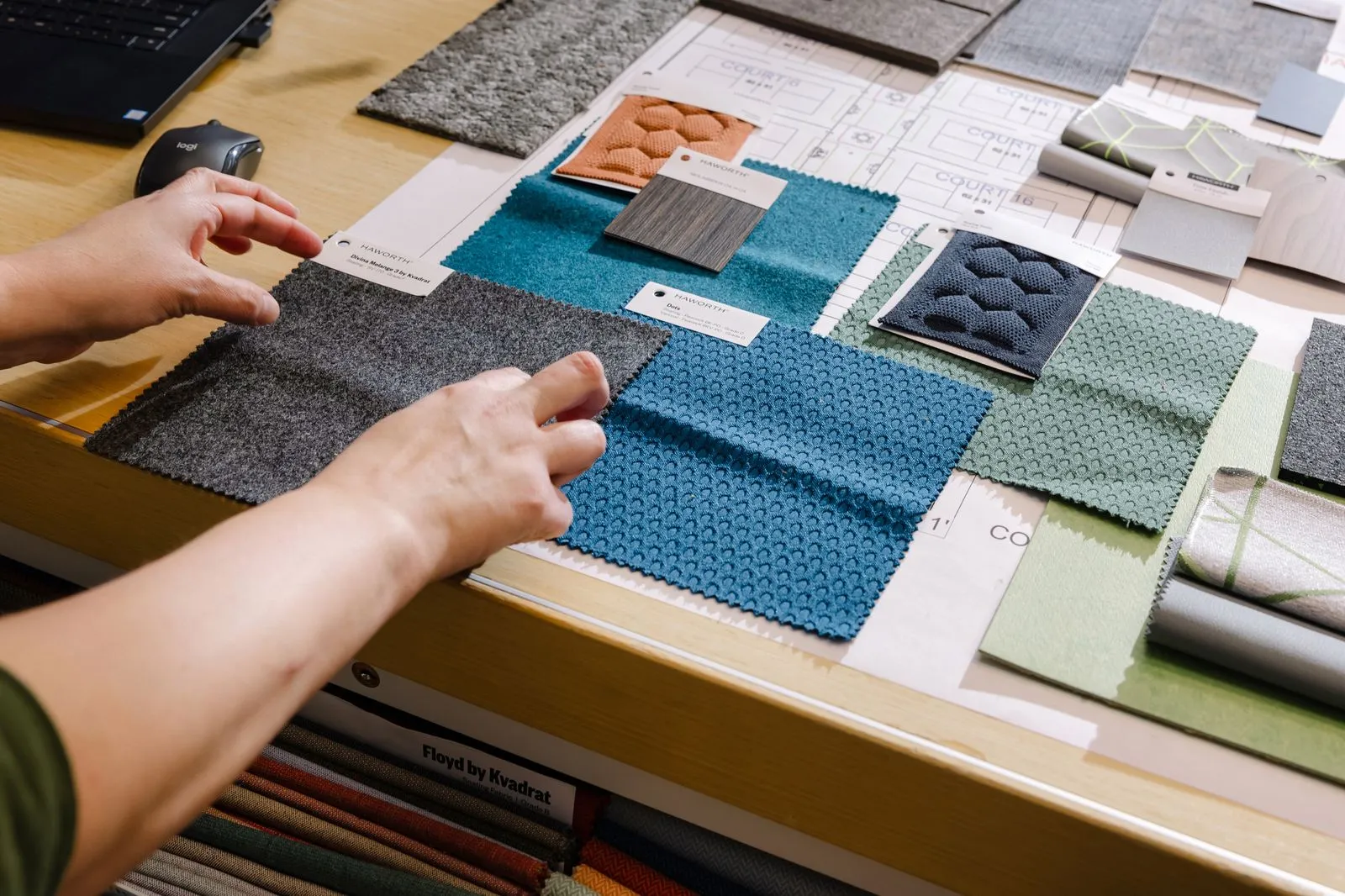
| Finishes and upholstery | A few stocked options | Some options, often stocked | Made to order from a full finish and textile library |
| Warranty | Short return window or limited warranty | Varies widely | Multi-year, often written for multiple-shift use |
| How you buy it | Online or in store | Distributor or direct | Through an authorized dealer, usually by project |
Hospitality pieces can be a sensible middle ground for lighter-use dining areas, and good restaurant furniture and dining chairs are often more durable than furniture made for the home. The gap is verification: contract manufacturers publish which standard a product was tested to, so you can hold them to it.
What is the difference between commercial grade and contract grade?
In everyday use, the two labels mean the same thing: furniture intended for commercial use. Neither term is regulated, so the label alone tells you less than the test reports and warranty behind it.
“Commercial grade” describes where the furniture is used, which is why you will also see it called furniture for commercial use. “Contract grade” describes how it is sold, through dealers and the architecture and design community on a specified project.
When a product is labeled commercial grade furniture or contract-grade furniture, ask what standard it was tested to. That question sorts the two meanings quickly.
What does BIFMA testing mean for contract furniture?
BIFMA publishes the ANSI standards that simulate expected commercial use on seating, desks, storage and panels. Conforming products “have been tested to repeatable and verifiable criteria intended to simulate expected use in a commercial” environment (BIFMA, 2019).
Each product type has its own standard. Office chair tests under X5.1 are based on a 275-pound, 95th percentile user, while lounge and public seating for waiting rooms and reception falls under X5.4 (BIFMA, 2019).
Public buyers write these standards into their specs. GSA’s furniture systems specification requires panels tested to X5.6, tables to X5.5 and pedestals to X5.9 (GSA, 2012).
One detail most buyers miss: BIFMA does not test products itself (BIFMA, 2016). The manufacturer or an accredited lab does the testing and states conformance.
What should a contract furniture warranty cover?
A contract warranty should name its coverage period by component and the use it assumes. The strongest are written for multiple shifts and tied to certified installation and service.
Haworth’s North America warranty is a useful benchmark. It covers 24-hour, 7-day multiple shift use, with a lifetime default period, 12 years on Haworth branded seating and 5 years on heavy-duty fabric (Haworth, 2026).
Textile ratings matter here. The Association for Contract Textiles guideline for high traffic public spaces is 30,000 double rubs of abrasion, double the 15,000 for private spaces (ACT, 2015).
Read the conditions, not just the years. Haworth requires products to be installed by Haworth or a Haworth-certified installer for a claim to be valid (Haworth, 2026). It is one reason Freeform works as a Best in Class Haworth dealer; here is why we chose Haworth.
How does total cost of ownership change the decision?
Contract furniture usually costs more on day one and less over the life of a workplace. Replacement, downtime and repair add up quickly when a cheaper piece of furniture fails in high-traffic environments.
Durability is only half of it: furniture that will last for years should also move with you. Contract systems, from mobile pedestals on casters to modular desks, can be reconfigured when teams grow, which a fixed residential desk rarely allows.
The fairest comparison is cost per year of service, not price per chair. Our guide to low bid vs. best value walks through how procurement teams weigh that.
How do you verify a “contract grade” claim?
Many good manufacturers and retailers use the contract grade label in good faith. A few polite questions will confirm whether a product fits your project.
- Test documentation. Ask for the test report or a signed affidavit of conformance, which BIFMA treats as acceptable documentation (BIFMA, 2019).
- The full standard name. A proper statement cites the standard number, title and year, such as ANSI/BIFMA X5.1-2011 (BIFMA, 2016).
- Warranty length and terms in writing, including shift use, weight limits and what voids coverage.
- Made-to-order finishes and materials used, with abrasion ratings on the textile and easy-clean surfaces where hygiene matters.
- Ergonomic fit, since modern office chairs are tested for durability, not for how well they suit the person sitting in them.
- Dealer support, meaning a local partner who can order replacement parts years from now.
- Installation, by an installer the manufacturer recognizes.
When does a project need a dealer?
A dealer earns its place once a project involves planning, multiple brands or public purchasing rules. Choosing furniture for a whole floor is a different job from buying one chair. Contract furniture, from commercial office furniture to healthcare chairs, is sold through authorized dealers, and those dealers carry the service after install.

At Freeform, that covers space planning and design, specification, FF&E procurement, delivery and installation by our in-house team, reconfiguration and warranty service. Here is what the office furniture buying process looks like from first meeting to punch list.
For government and education buyers, a dealer with cooperative contracts can simplify purchasing. Freeform holds GSA, NASPO and OMNIA contracts, and specialized areas like healthcare furniture add infection-control and cleanability needs.
Frequently asked questions
Is contract furniture more expensive?
Usually, yes, on the initial price per piece. Longer warranties, made-to-order finishes and fewer replacements often make it the lower-cost choice over the life of a workplace.
Is commercial grade the same as contract grade?
In practice the terms are used interchangeably for furniture intended for commercial use. Neither is regulated, so check the test standard and warranty rather than the label.
Can an organization buy contract furniture without a dealer?
Some items are available online, but most contract manufacturers sell through authorized dealers. Warranties can also depend on authorized sale and certified installation, which a dealer provides.
How long does contract furniture last?
It depends on the product, the use and the care it gets. Warranty periods are a good guide: Haworth, for example, offers a lifetime default period and 12 years on its branded chairs (Haworth, 2026).
Ready to furnish a workplace that lasts?
People spend about 90,000 hours at work in a lifetime, and the furniture around them should hold up to every one. Talk to the Freeform team in Boise, Spokane or the Tri-Cities, and we will help you bring your workplace to life.