Medical office furniture does far more than fill a waiting room or support a clinician at a workstation. The physical environment of a healthcare practice directly shapes patient perception, staff well-being, and the clinical workflow that determines how many patients a practice can serve effectively each day.
Outdated, worn, or poorly configured furniture signals neglect to patients and quietly burdens the staff who work in that space for eight to twelve hours at a stretch.
The Hidden Cost of Outdated Medical Furniture
Most healthcare administrators track overhead costs like staffing, supplies, and software, yet the condition of physical furnishings rarely appears on a strategic review. This oversight carries real consequences.
Healthcare financial research consistently shows that patient satisfaction scores influence reimbursement rates under value-based care models, and the physical environment is a measurable driver of those scores.
Aging reception chairs with cracked upholstery, wobbly clinical furniture, and cluttered nurses stations create friction at every point of the patient journey. That friction accumulates into longer perceived wait times, lower satisfaction ratings, and, over time, reduced patient retention.
Patching the gaps with discount office furniture rarely helps, because low-cost pieces wear out fastest in high-traffic areas.
Consider what a dated medical office communicates to a new patient walking in for the first time. The impression formed in the first thirty seconds is difficult to reverse, regardless of the clinical excellence that follows.
Patient Comfort Is a Clinical Variable
Patients arriving at a doctor’s office are often anxious, in pain, or both. Chairs that fail to support proper posture compound physical discomfort during what may already be a stressful visit.
Waiting room chairs designed for a general commercial setting lack the firm, supportive construction that accommodates a wide range of body types and mobility limitations.
Purpose-built medical seating addresses several specific needs that standard office chairs simply do not:
- Bariatric capacity: Chairs rated to 500 pounds or more accommodate a broader patient population without creating visible differences in seating options.
- Antimicrobial upholstery: Healthcare-grade vinyl and fabric resist bacterial growth and withstand frequent disinfection with clinical-strength solutions.
- Firm, higher seat height: A height of 18 to 20 inches from the floor helps elderly patients and those with joint conditions rise without strain.
- Open-arm or arm-free designs: Armless or open-arm configurations accommodate patients using mobility aids and reduce transfer barriers.
These design specifications reflect evidence-based thinking about how physical environments interact with patient outcomes. The Center for Health Design has documented how environmental factors, including furniture configuration and material quality, measurably affect patient anxiety and recovery perception.
The Seating Mix a Healthcare Space Needs
No single chair serves every patient. A well-planned reception area mixes standard guest chairs with wider bariatric chairs, so every patient finds comfortable seating without being singled out.
Common healthcare seating solutions include:
- Waiting room seating: Connected reception seating, standalone guest seating, a bench for families, and a sofa or lounge grouping that softens the room.
- Patient seating in clinical areas: Recliners for infusion and phlebotomy areas, hip chairs that make standing up easier after joint procedures, and sturdy side chairs beside the exam tables.
- Office seating for staff: Task chairs, medical stools for clinicians, and conference tables with seating for consult spaces.
Healthcare spaces like pediatric practices and behavioral health settings add their own requirements, from cleanable soft furnishings to weighted, tamper-resistant pieces. A coordinated seating collection adds sophistication and keeps the room cohesive while covering all of them.
The Haworth Health Lines We Install
Freeform is a Haworth health dealer, so the zones above are not abstract advice. They map to product families we specify, deliver, and install for healthcare clients across the Inland Northwest.
These are the lines our healthcare clients ask about most.
Patient Rooms and Infusion: Benson Recliners
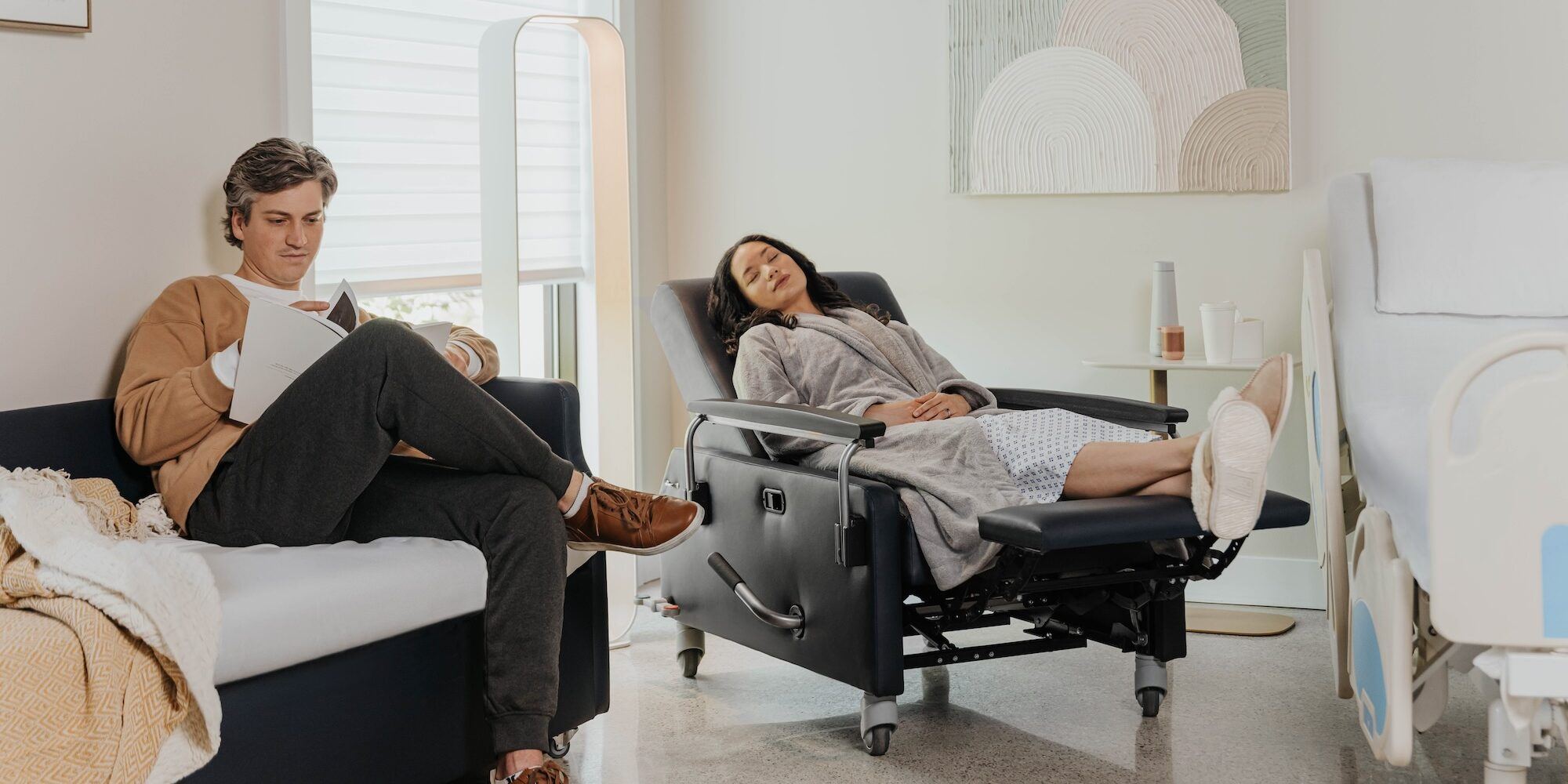
Benson patient recliners are built around safe transfers: dual transfer arms make the move from bed to recliner easier and more confident, and locking casters keep everything planted.
The infinite-position reclining system adjusts anywhere up to 45 degrees, with glider, sleep, and bariatric versions plus accessories like IV pole holders and tray tables. One recliner platform covers acute care, orthopedic and cardiac recovery, postpartum rooms, and infusion areas.
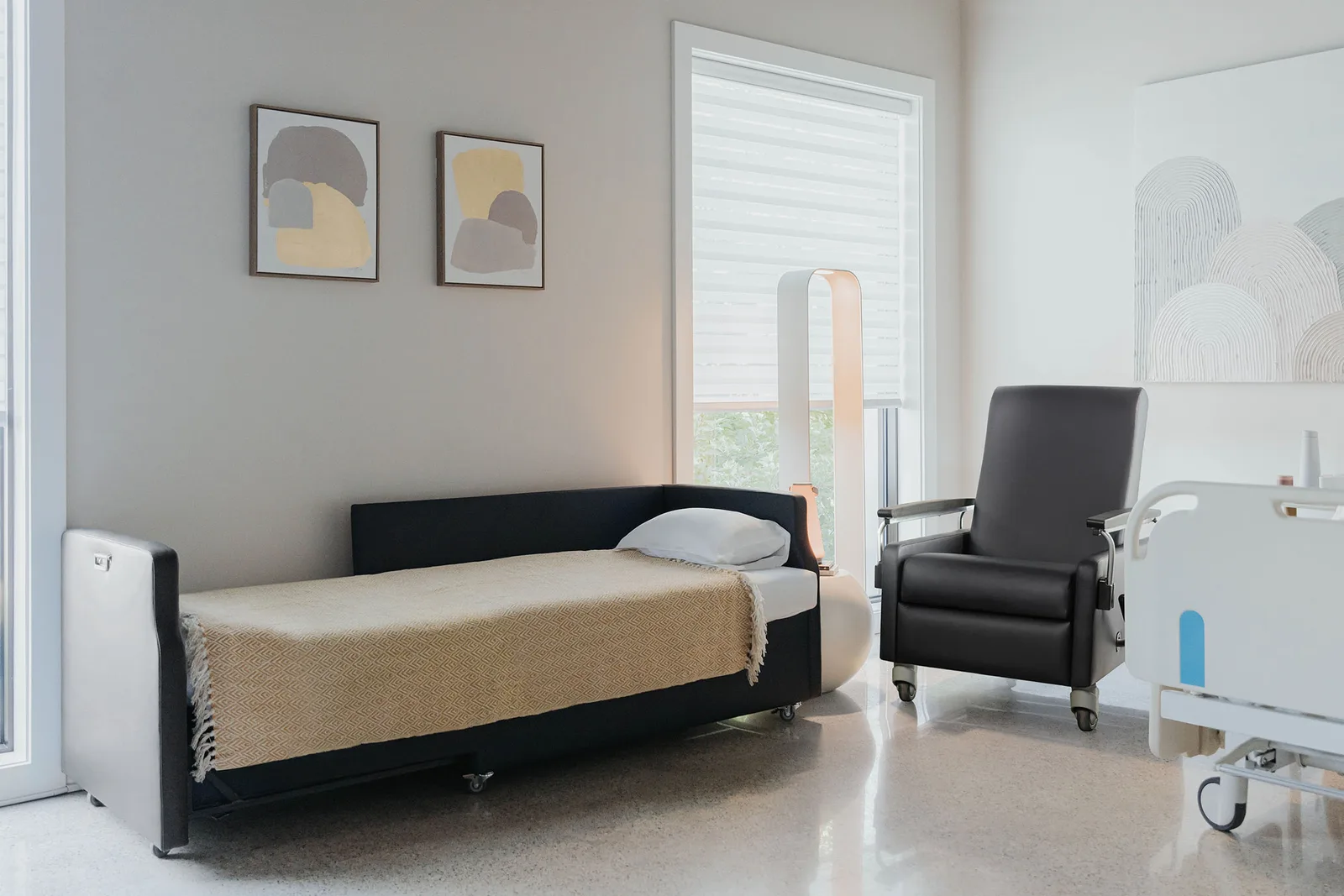
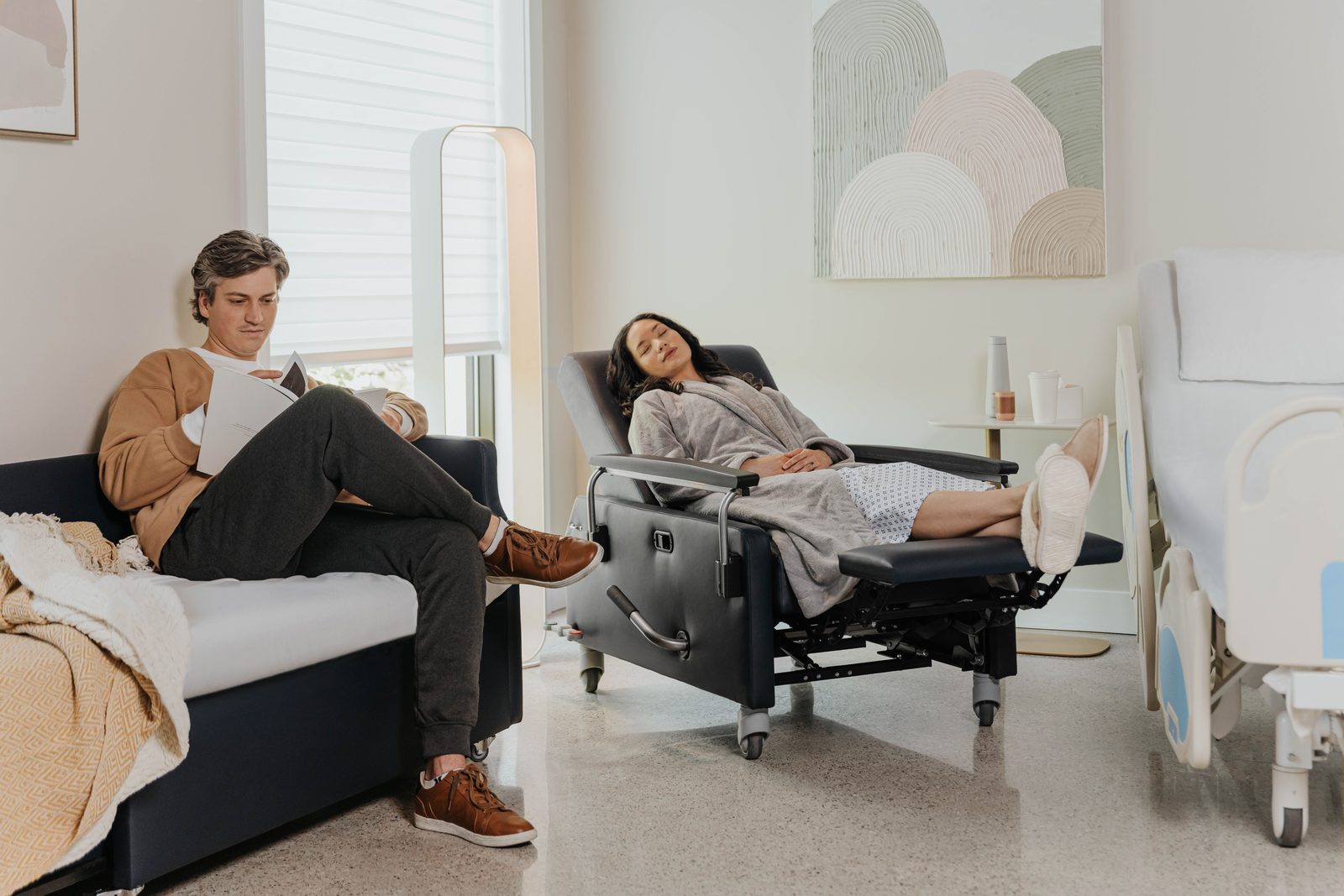
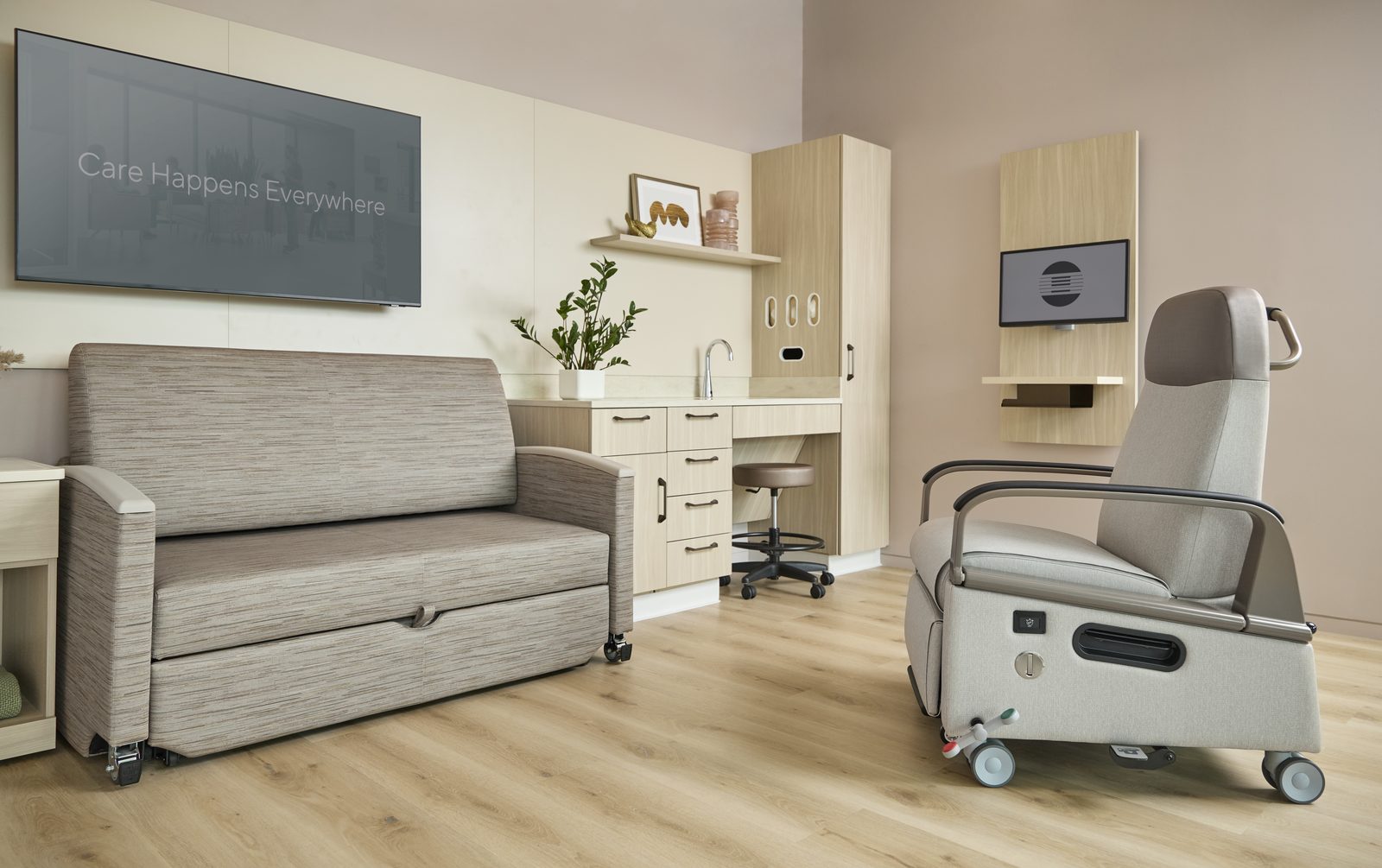
Patient rooms are family rooms now. Overnight guests need somewhere better than a window ledge, which is why we increasingly spec sleepover sofas and coordinated healthcare casework alongside the recliner. The room reads as one designed space, and families stop improvising beds out of waiting room chairs.
Exam Rooms: The Maari Family
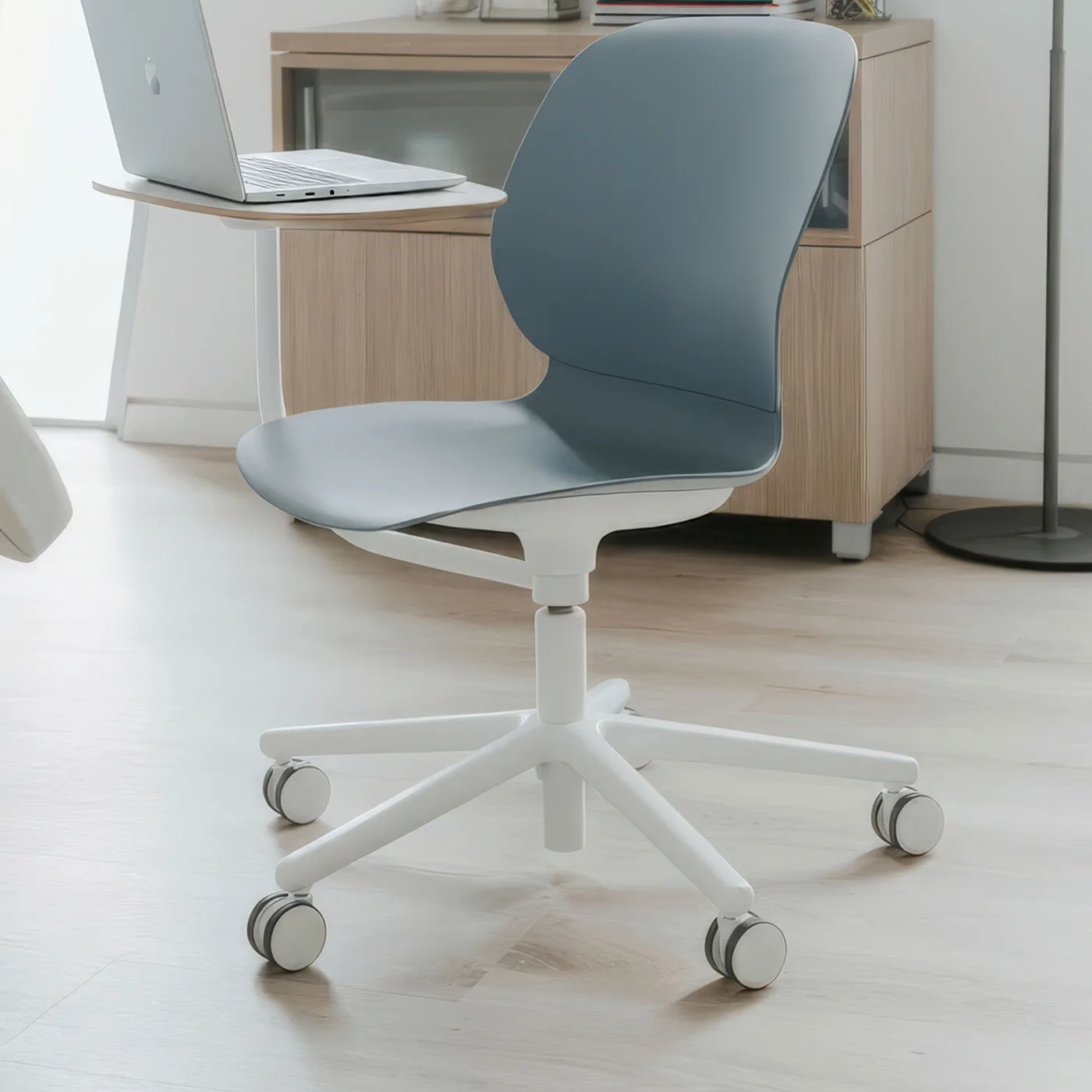
The Maari exam stool pairs a bleach-cleanable shell and base with a higher back than a traditional exam stool, on a compact footprint sized for modern exam rooms.
It skips upholstery entirely for the highest level of cleanability, and the same Patricia Urquiola-designed shell comes as side and conference chairs, so consult spaces and clinical areas share one cohesive look.
Task Chairs That Survive Every Shift: Soji and Zody LX
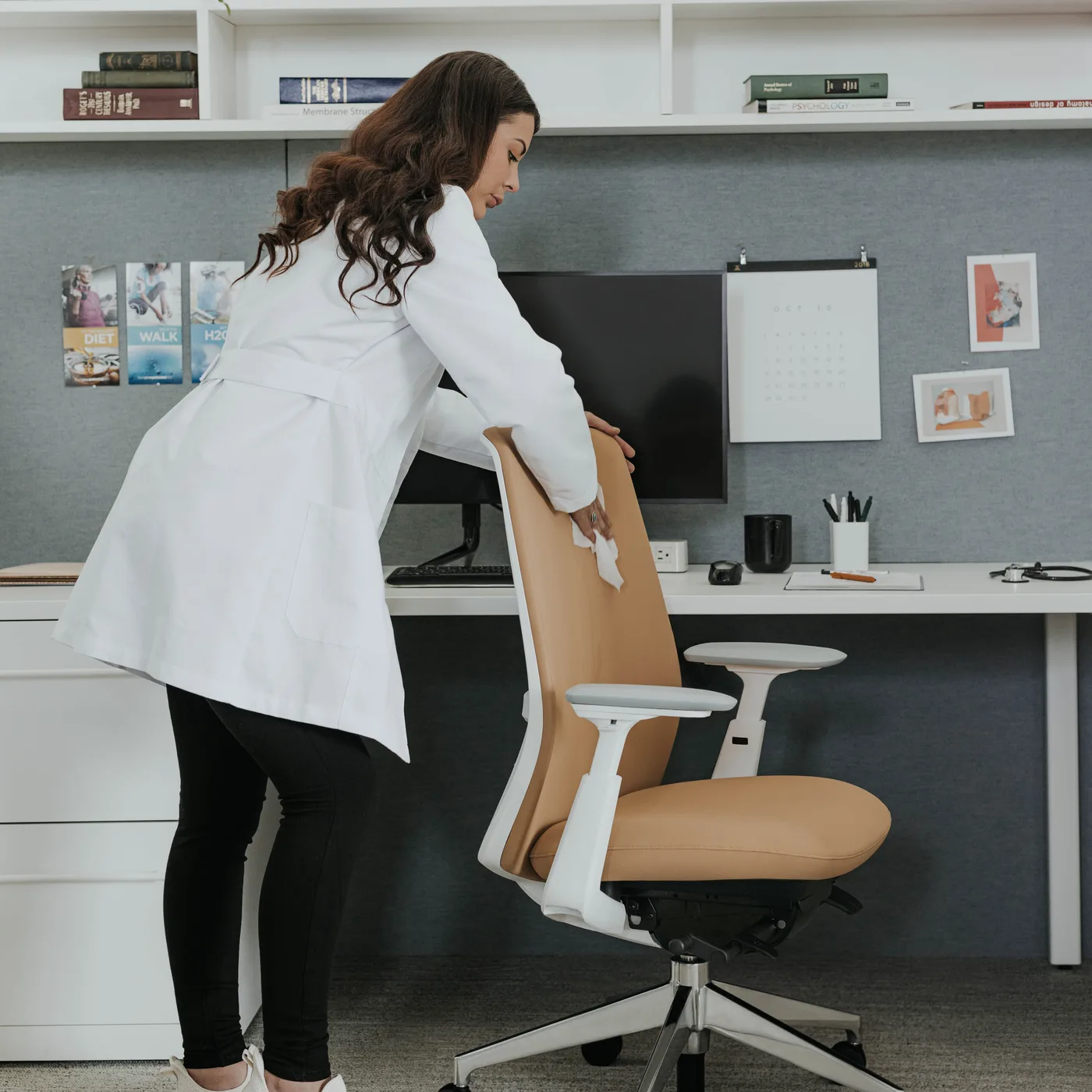
Soji was designed for healthcare’s multi-shift reality: a seat slider, forward tilt, adjustable lumbar, and four arm options let each caregiver dial in their own support.
Zody LX Cleanable+ adds a dual-posture option that supports the in-between perch of sit-to-stand work, which is exactly how nursing staff use height-adjustable stations.
Both lines are bleach cleanable with the 2% solution the CDC recommends, and Haworth backs them with a 12-year, around-the-clock warranty. Soji’s XL version supports up to 500 pounds, matching the bariatric capacity the waiting room already plans for.
Staff Ergonomics and Clinical Performance
Clinicians, medical assistants, and administrative staff spend the majority of their working hours seated or standing at desks and counters that were often specified years ago without a systematic review of posture and reach.
Musculoskeletal strain is one of the leading causes of absenteeism among healthcare workers, with nursing and clinical support staff particularly vulnerable to back, neck, and shoulder injuries linked to repetitive posture demands.
A furniture refresh targeted at staff workstations typically addresses several interconnected problems:
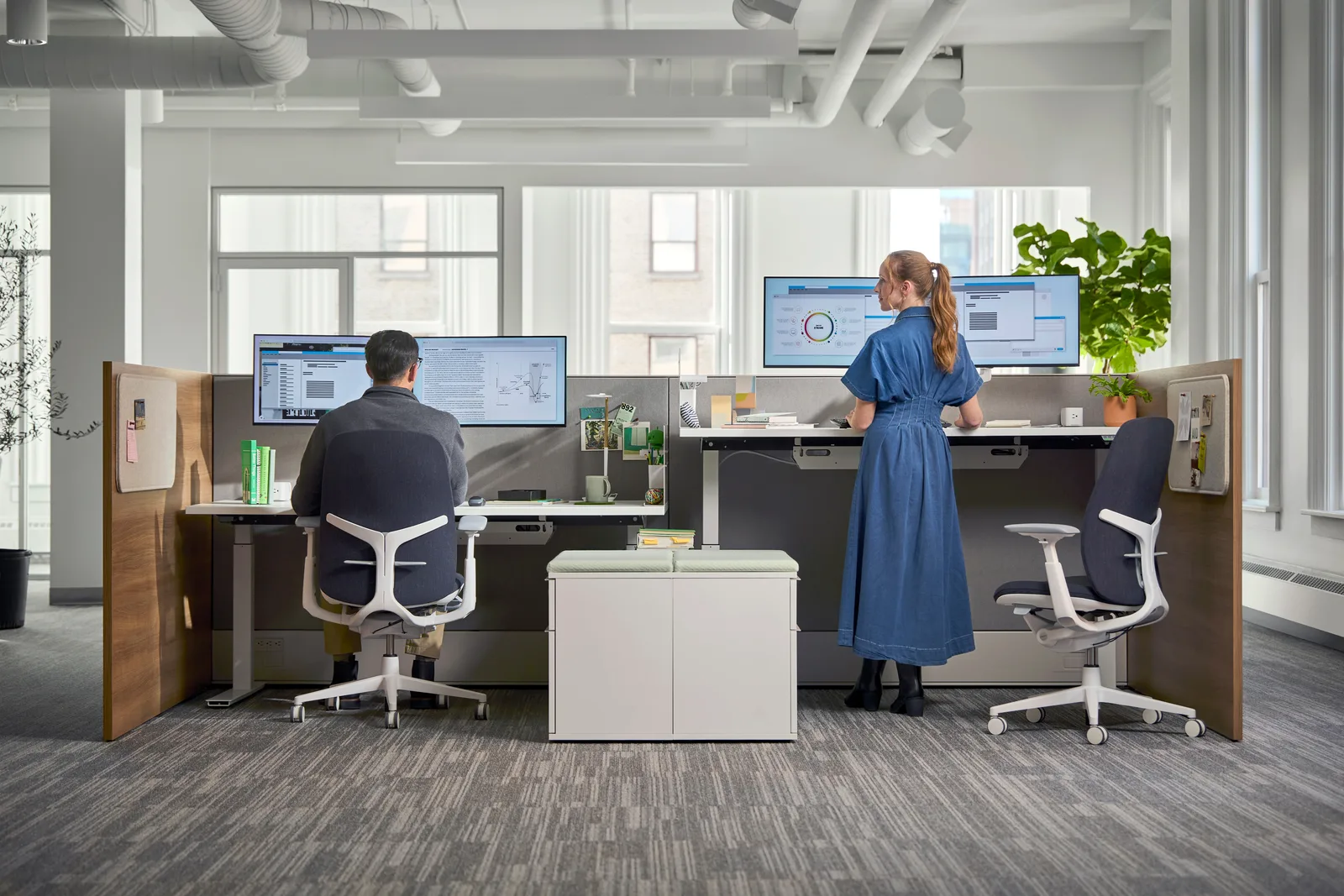
- Height-adjustable desks at nursing stations: Allowing staff to alternate between sitting and standing reduces cumulative spinal load across a full shift.
- Task chairs with adjustable lumbar and ergonomic support: Chairs without proper lumbar adjustment force staff into compensatory postures within the first hour of a shift.
- Monitor positioning and keyboard tray integration: Desk setups that align screen height and keyboard position to individual users reduce cervical strain significantly.
- Mobile carts and adjustable procedure stools: Clinical staff who move between patient rooms benefit from lightweight, height-adjustable options that travel with them rather than requiring repeated bending and reaching.
When physical strain decreases, staff concentration and accuracy improve. A supportive workspace pays for itself in productivity and fewer sick days.
This relationship between physical environment and cognitive performance is especially relevant in medical settings where documentation accuracy and clinical attention directly affect patient safety.
Infection Control and Material Standards
Standard commercial furniture is not designed to survive the chemical demands of a healthcare environment. Disinfectants used in medical offices, including quaternary ammonium compounds and bleach-based solutions, degrade conventional upholstery, laminate surfaces, and adhesives within months of regular use.
Seams and foam beneath cracked vinyl become reservoirs for pathogens that no surface-level cleaning can address.
Medical-grade furniture specifies materials tested against healthcare cleaning protocols. Cleanability drives material choice in medical environments, and the key distinctions include:
- Smooth or heat-welded upholstery: Eliminates the stitched seams where fluids and bacteria accumulate.
- Antimicrobial surface treatments: Silver-ion and other embedded anti-microbial treatments inhibit bacterial colonization between cleaning cycles.
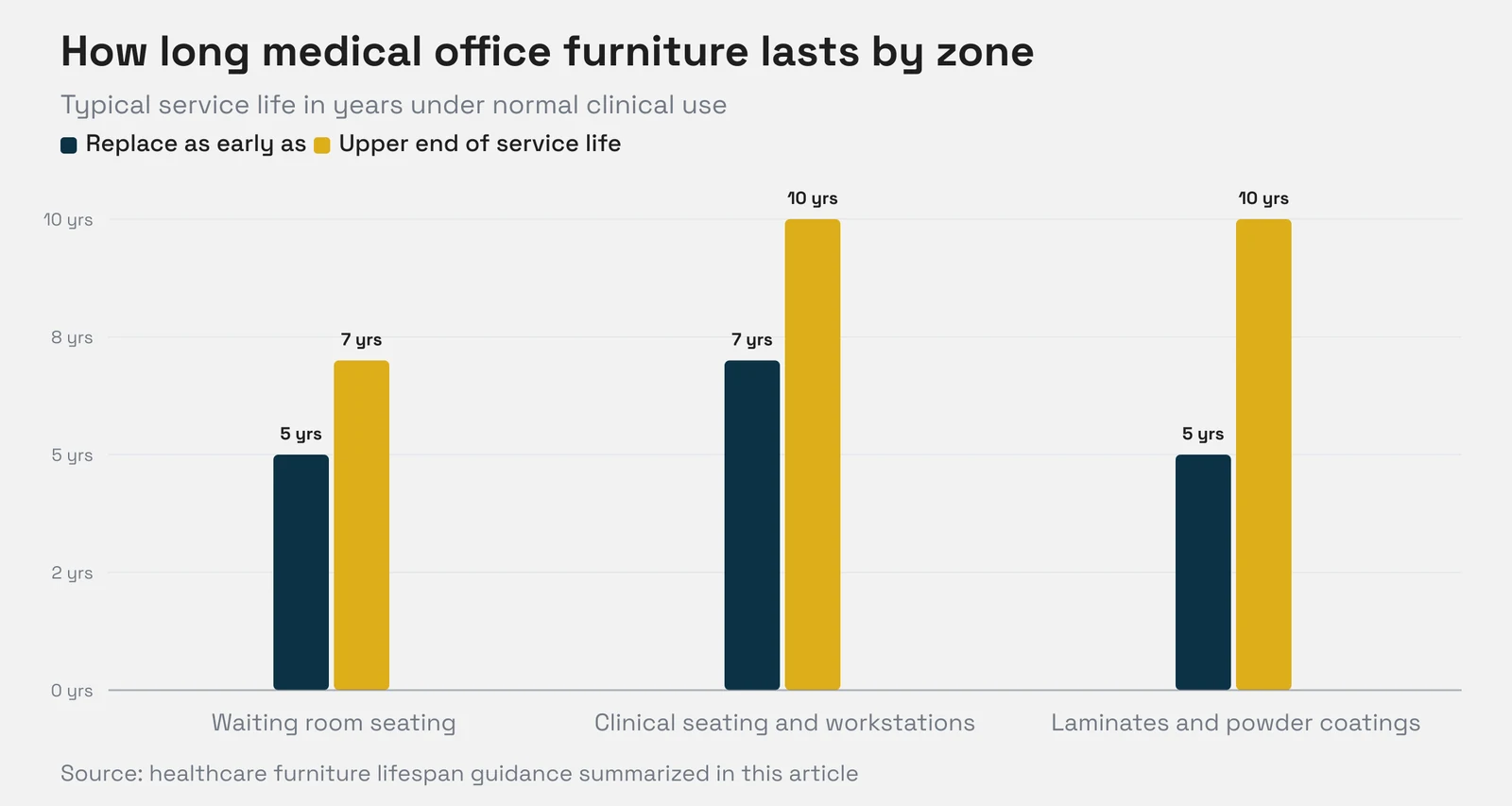
- Durable, chemical-resistant laminates and powder coatings: Surfaces rated for repeated exposure to clinical disinfectants maintain integrity for five to ten years under daily use.
- Non-porous hard surfaces: Solid surface materials on reception desks and nurses stations prevent fluid absorption and stay easy-to-clean between patients.
| Requirement | Standard commercial furniture | Medical-grade furniture |
|---|---|---|
| Upholstery seams | Stitched seams that trap fluids and bacteria | Smooth or heat-welded surfaces |
| Surface treatment | No antimicrobial protection | Silver-ion and embedded antimicrobial treatments |
| Cleaning chemicals | Degrades within months of clinical disinfection | Rated for quaternary ammonium and bleach-based solutions |
| Weight capacity | Standard ratings only | Bariatric ratings to 500 pounds or more |
| Seat height | Varies widely | 18 to 20 inches to help patients rise without strain |
A furniture refresh that prioritizes these material specifications is not an aesthetic decision alone. It is a direct investment in durability and in the infection control standards that regulatory agencies and accreditation bodies review during inspections.
Workflow Efficiency and Space Utilization
Medical office layouts evolve as practices grow, add providers, or shift service lines. Furniture specified for a practice five or ten years ago may no longer reflect how the clinical team moves through the space.
Fixed reception counters that cannot be reconfigured, storage cabinets that no longer match the workflow, examination rooms with furniture arrangements that obstruct provider movement, and waiting areas that cannot adapt to variable patient volumes all create daily inefficiencies that compound over time.
Modular furniture systems offer medical offices a practical path forward. Reception configurations built from modular components can be reconfigured when staffing changes.
Practice managers sourcing medical office furniture in Spokane often prioritize these modular layouts to handle growing patient volumes without undergoing major structural renovations.
Waiting areas with movable seating clusters can contract or expand based on patient volume patterns by day or season. Clinical room furnishings designed with standardized dimensions allow a practice to rotate and replace individual pieces without retrofitting the entire room.
The financial case for modular medical furniture is straightforward. A practice that invests in adaptable systems avoids the full replacement cost that a fixed, custom installation demands when the space needs to change.
The Regulatory and Accreditation Dimension
Healthcare practices operating under accreditation standards from organizations like The Joint Commission or NCQA face periodic reviews that include the physical environment. Surface condition, maintenance of furnishings, and infection control adequacy are observable factors in those reviews.
Furniture that has visibly deteriorated, or that does not meet current material standards for healthcare settings, can generate findings that require corrective action within defined timeframes.
Proactive furniture replacement, rather than reactive replacement following an inspection finding, gives a medical practice control over timing and budget. Government-affiliated clinics purchasing through GSA contracts are held to the same standards.
Spreading a phased refresh across twelve to eighteen months distributes capital expenditure and allows staff to adapt to new configurations without disrupting clinical operations.
Space Planning for a Furniture Refresh
A successful refresh begins with space planning: a systematic audit of existing furnishings by zone, covering the waiting area, reception, clinical corridors, examination rooms, and staff work areas. Each zone has distinct functional demands, occupancy patterns, and maintenance requirements that should drive specification decisions.
An online store listing cannot tell you how a chair survives five years of daily clinical use, which is why this audit happens in person. Useful evaluation criteria for each zone include:
- Current condition of upholstery, frames, and adjustment mechanisms
- Compliance with current infection control material standards
- Adjustability and comfort for primary users in that zone
- Dimensional fit with how the space is used versus how it was originally planned
- ADA accessibility requirements for patient-facing seating and counters
Equip the zones with the highest patient contact and the greatest staff occupancy hours first; that typically delivers the fastest return on investment. Whether upgrading a single location or outfitting healthcare furniture in Boise, focusing early efforts on waiting areas and nursing stations often delivers the greatest immediate value to both patients and clinical teams.
The same evaluation logic applies when choosing business furniture for corporate spaces.
Frequently Asked Questions
How often should a medical office replace its furniture?
Most healthcare-grade seating and desk furniture has a functional lifespan of seven to ten years under normal clinical use, though high-traffic waiting room chairs may require replacement in five to seven years. Upholstery integrity and frame stability are the primary indicators, since degraded surfaces compromise infection control before structural failure occurs.
Do medical furnishings need to meet specific standards?
Yes. Healthcare furniture is expected to meet standards for chemical resistance, weight capacity, and surface integrity that standard commercial furniture does not address.
Facilities pursuing or maintaining accreditation through bodies like The Joint Commission should verify that furnishings meet current infection prevention guidelines, which reference surface materials and maintenance protocols explicitly.
Can a medical office phase a furniture refresh rather than replacing everything at once?
A phased approach works well for most practices and is often the more financially practical path. Replacing patient-facing and high-contact zones first, then addressing staff workstations and secondary spaces over twelve to eighteen months, spreads capital expenditure without disrupting clinical operations during the transition.
How does furniture affect patient satisfaction scores?
Patient satisfaction instruments used in value-based care models, including Press Ganey surveys, include questions about the physical environment that directly reflect furniture condition and comfort. Research from the Center for Health Design indicates that physical environment quality consistently appears as a factor in patient willingness to return and recommend a practice to others.
Ready to Refresh Your Medical Office?
A thoughtful furniture refresh improves patient comfort, supports clinical staff through long shifts, and positions a practice to meet the infection control and accreditation standards that matter most in 2026. It is one of the most tangible investments in better patient care a practice can make. Contact Freeform today to discuss a space assessment and the healthcare furniture solutions that match your practice’s clinical needs and budget timeline.